

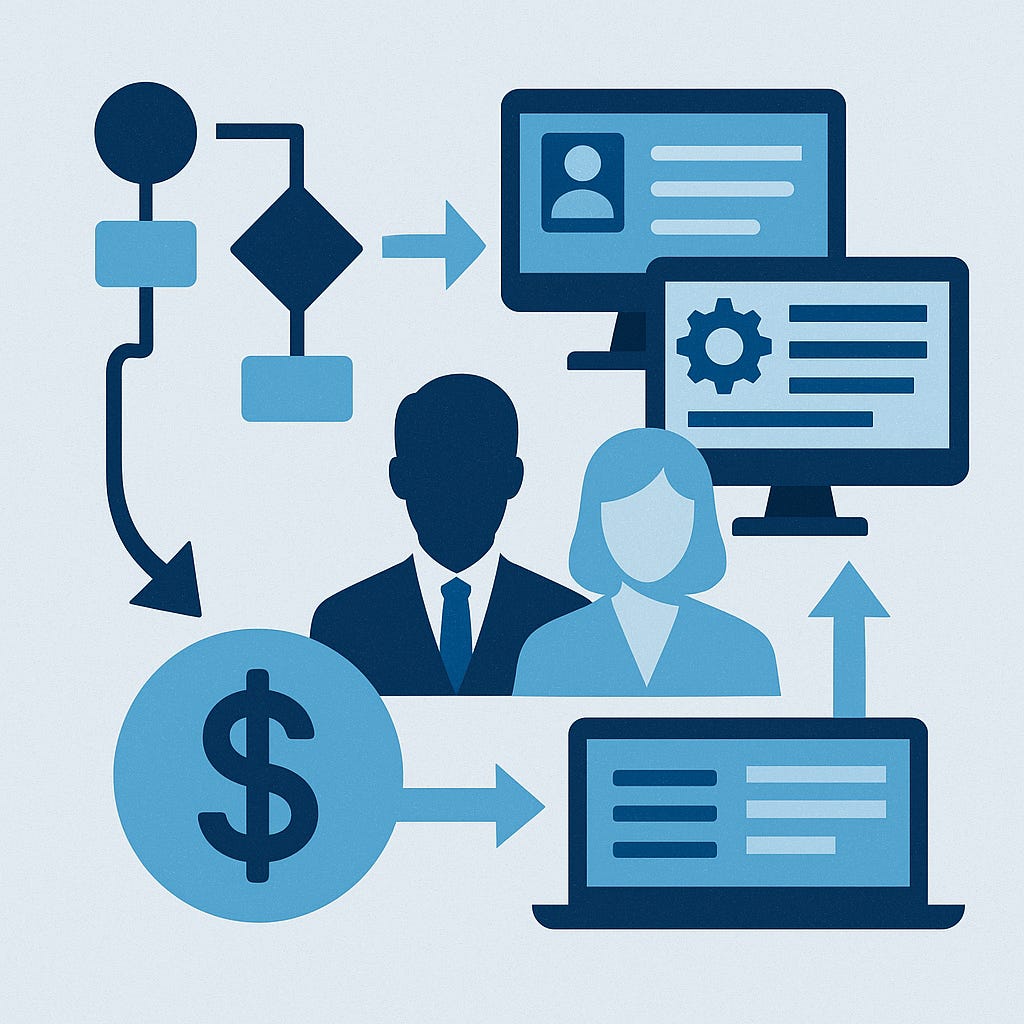
In 2026, organizations will face one of the most important transformation decisions of the decade: continue patching together disconnected revenue processes, or finally modernize Lead-to-Cash (L2C) from the ground up.
Over the past several years, most companies have accumulated a tangled web of CRM customizations, CPQ quick fixes, spreadsheet-driven approvals, and siloed operations. The downstream effects are now undeniable: slow quoting cycles, revenue leakage, frustrated sales teams, and operations leaders drowning in manual work.
But these issues aren’t just technical nuisances.
They represent a structural problem inside the business.
L2C spans IT, Sales, Finance, Operations, and Customer teams—yet most organizations still treat it as isolated systems.
The Shift: Lead-to-Cash Is Now a Cross-Platform, Cross-Team Discipline
For years, companies tried to solve every revenue challenge inside a single platform. But modern L2C problems don’t live in one system anymore—they live in the gaps between them.
CRM manages pipeline
CPQ manages configuration and pricing
Digital workflows manage approvals and orchestration
ERP manages orders and fulfillment
RevOps, IT, Sales, and Finance all operate on different truths
The future belongs to organizations that acknowledge a new reality:
Lead-to-Cash is not a “system problem” — it’s an end-to-end operating model problem.
The companies that thrive will be those who redesign their L2C architecture, not just redeploy tools.
What’s Driving the Pressure in 2026?
Three big factors are converging:
1. Revenue Leakage Has Become More Visible — and More Costly
Disconnected quoting, inaccurate pricing, and manual handoffs are now measurable losses. CFOs are paying attention.
2. Buying Cycles Demand Speed and Precision
Customers expect real-time pricing, seamless order management, and clean execution.
Slow, inconsistent processes no longer scale.
3. Platforms Are Evolving Faster Than Processes
Innovations in CRM, CPQ, workflow orchestration, and ERP can’t succeed if the underlying process is still fragmented.
Technology is no longer the limiter.
Process clarity and cross-team alignment are.
Why 2026 Is the Year of L2C Modernization
The market is signaling a clear pattern:
• Businesses want clarity
A roadmap that makes sense, sequencing that reduces risk, and an operating model that aligns IT, RevOps, and Sales.
• Teams want empowerment
The ability to break down internal silos and fix root-cause issues, not surface symptoms.
• Leaders want outcomes
Shorter sales cycles, predictable quoting, lower operational cost, and better customer experience.
In short:
Companies don’t want more systems — they want a connected revenue engine.
What Modern L2C Excellence Looks Like
In talking with hundreds of leaders across IT, Sales Ops, and RevOps, a modern L2C organization has these four traits:
1. A clear L2C architecture
Roles, responsibilities, systems, and handoffs are documented and intentional.
2. A unified process across platforms
CRM, CPQ, ERP, and workflow tools operate as one ecosystem, not siloed components.
3. Advisory-first transformation
Teams diagnose process issues before committing to major implementations.
4. A phased improvement model
Organizations start with clarity, then execute targeted improvements, and finally optimize with ongoing support.
This is how teams eliminate guesswork and achieve consistent revenue execution.
The Mandate for 2026
Whether you are a CIO, IT Director, RevOps leader, or Sales Ops owner, the expectations have changed:
Simplify processes.
Align your systems around the customer journey.
Design L2C as an intentional operating model.
Invest in cross-platform orchestration, not siloed tooling.
Build a roadmap your teams understand — and can execute.
2026 will reward organizations that break silos, streamline workflows, and treat Lead-to-Cash as a strategic discipline.
Those who continue patching the old model will fall behind.